
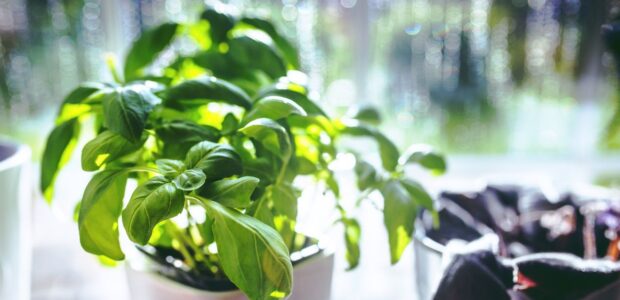
Fresh herbs are one of the most expensive things in the grocery basket relative to how little you use — and one of the easiest to grow yourself. A windowsill herb garden needs no garden, no balcony, and only a few small pots. This guide walks through exactly what to buy, which herbs to start with, and how to keep them alive.
What you need before you start
- Small pots with drainage holes (8–12 cm is enough to begin)
- A tray or saucers to protect the sill from water
- General-purpose potting compost
- Herb seeds or small starter plants
- A sunny windowsill — ideally one that gets at least 5–6 hours of light
The five easiest herbs for a windowsill
Basil loves warmth and regular watering and grows quickly from seed. Mint is almost impossible to kill, but keep it in its own pot because it spreads aggressively. Coriander gives fast harvests and prefers cooler spots. Chives regrow after every cut, and rosemary is slow but extremely forgiving once established.
Seeds or starter plants?
Starter plants cost more but give you harvests within days and are the safer choice for your first attempt. Seeds are cheaper and more satisfying; basil and coriander germinate reliably indoors. A good compromise: buy basil and rosemary as plants, sow coriander and chives from seed.
How to plant, step by step
Fill each pot with compost up to 2 cm below the rim. Water the compost first so it is evenly moist. For seeds, scatter thinly, cover with a few millimetres of compost, and mist. For starter plants, ease the plant out, loosen the roots gently, set it at the same depth it grew at, and firm the compost around it. Label each pot — seedlings all look alike.
Light: the make-or-break factor
Most herbs are Mediterranean plants; they want the brightest sill you have. If your herbs grow pale and leggy, they are asking for more light. Turn each pot a quarter turn every few days so all sides grow evenly, and keep the glass clean — dusty windows quietly cut the light.
Watering without drowning
Herbs hate sitting in water. Water when the top centimetre of compost feels dry, pour slowly until a little drains out, then empty the saucer after ten minutes. Basil wilts dramatically when thirsty and recovers within an hour of watering — it is a built-in reminder.
Harvesting so plants keep producing
Never take more than a third of a plant at once. Pinch basil just above a pair of leaves and it will branch into two new stems. Cut chives at the base, a small bunch at a time. Regular small harvests keep every herb compact and productive.
Common beginner problems, solved
Yellow leaves usually mean overwatering — let the compost dry out more between waterings. Tiny flies (fungus gnats) mean the surface stays too wet; let it dry and add a thin layer of fine gravel on top. White powdery patches mean the air is still and damp — open the window more often.
A windowsill herb garden pays for itself within a couple of months and makes everyday cooking noticeably better. Start with three pots on your sunniest sill, water with restraint, and harvest little and often.